
(231)-889-4081 | Worship every Sunday @ 10 a.m
(231)-889-4081 | Worship every Sunday @ 10 a.m
Engage with our most recent sermons.

“St. Ives” A Reflection on Luke 20:27-38 by the Rev. Alison Andrea Young shared on November 9, 2025 at the First Congregational UCC of Onekama, Michigan.
As I was going to St. Ives, I met a man with seven wives. Each wife had seven sacks, each sack had seven cats, each cat had seven kits: kits, cats, sacks, and wives. How many were going to St. Ives? (PAUSE)
“There were seven brothers; the first married, and died childless; then- the second and the third married her, and so in the same way all seven died childless. Finally the woman also died. In the resurrection therefore, whose wife will the woman be?” Luke 20:29-33b
Is it any coincidence that this traditional nursery rhyme and our scripture
lesson this morning sound like twins? . . .
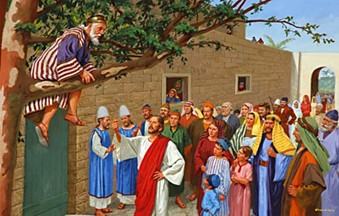
“Out of His Tree” A sermon based on Luke 19:1-10 and 1 Corinthians 4:1-10 delivered on Sunday, November 2, 2025 by Rev. Alison Andrea Young at the First Congregational UCC of Onekama, Michigan.
He was trying to see who Jesus was,
but on account of the crowd he could not,
because he was short in stature.
So he ran ahead and climbed a sycamore tree to see him.
—Luke 19.3-4
If the crowd in Jericho that day were a more modern one, they might have said something like “Look at that little shyster tax collector guy—that sinner—always hate it when he comes to my door—what is he doing climbing up there? He must be ‘out of his tree!’” They would all agree with the self-descriptive words of Psalm 119: 141 “I am small and despised” to describe him! . . .

‘Poured Out” A sermon based on Joel 2;23-32; Psalm 65, and Luke 18:9-14 delivered at the First Congregational UCC of Onekama, Michigan on Sunday, October 26, 2025 by the Rev. Alison Andrea Young.
There is a Greek word, kenosis. This word means ”an emptying,” but like most words
from other languages, once it is translated into English, it loses much of the fullness of its true
meaning. The word has taken on a theological significance through the life and death of Jesus,
however. It is said that kenosis describes the “emptying” that Jesus experienced when he
humbled himself to take on human form. Emptying in this case, also Implies the “pouring out” of
Jesus’ Spirit and then, in turn, the “filling up” of something. . . .
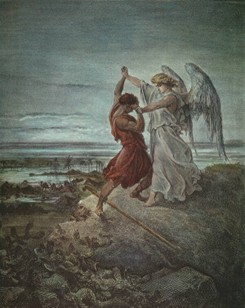
“Night Wrestling” A sermon based on Genesis 32:22-31; Psalm 121 and 2 Timothy 3:14-4:5 delivered on October 19, 2025 by the Rev. Alison Andrea Young at The First Congregational UCC of Onekama, Michigan.
You know when you drive into almost any town in America there is a sign saying, “Home of So-in-So who won a Gold Medal at the Olympics for their sport in a certain year.” If night wrestling were an Olympic sport, then Jacob would have won the gold medal at the ford of the Jabbok River. Of course, he would also have made up his own rules, something for which his past life of trickery prepares us. For night wrestling by Jacob’s rules, you would have to wrestle with a man who you could not see and did not know, and someone who would not tell you their name. Also, instead of the gold medal the person that you were wrestling with would give you a new name AND a dislocated hip!. . .

”Healing Tears’^ A sermon based on Jeremiah 8:18-9:1 delivered on September 21, 2025 at the First Congregational UCC of Onekama, Michigan by the Rev. Alison Andrea Young.
“You who are my Comforter in sorrow, my heart is faint within me. Listen to the cry of my people from a land far away:. . . ‘Is the Lord not in Zion?’ . . .’Since my people are crushed, I am crushed; I mourn, and horror grips me. Is there no balm in Gilead? . . . Why then is there no healing for the wound of my people? Oh, that my head were a spring of water and my eyes a fountain of tears! I would weep day and night for the slain of my people’.” (Jer. 8:18-9:1)
Jeremiah, prophet of God, speaking for God, is in agony. He sees his people ready to be hustled off into exile and his heart is breaking. As he speaks, he weeps. He sheds a fountain of tears. These are God’s tears. It is God’s grief which is “with” the grief of the people and of Jeremiah that is expressed here. God, then, is not separate from our grief. God does not cause our grief, God cries with us and for us, and it is God’s heart that is sick along with Jeremiah’s over the destruction and dispersion of the chosen people.. . .
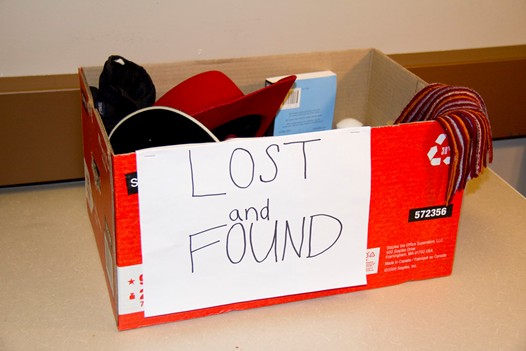
“Lost and Found” A sermon based on Luke 15:1-32 by the Rev. Alison Andrea Young on September 14, 2025 at the First Congregational Church of Onekama, MI delivered by Rev. Sami McRae.
There are many “Losts and Founds” in our lives. Each time I would walk the school halls when my children were little, I would pass a big table piled high with the things that the children had left at school, mittens, coats, boots, scarves, books, hats and so on. If you have ever come off of an airplane and waited at the baggage check until the last bag has been claimed and yours is not there, you have had experience with the “Lost and Found” of all “Lost and Founds”—the airline version. . . .
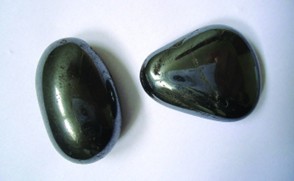
“The Touchstone” A sermon based on Jeremiah 1:4-10, Psalm 103, and Luke 13:10-17 delivered by the Rev. Alison Andrea Young at the First Congregational UCC of Onekama, Michigan on Sunday, August 24, 2025.
A touchstone is a black silicone stone, somewhat like flint, which was used to check the purity of gold and silver by the streak left on the stone when rubbed by the metal. Thus, a touchstone, is anything by which a thing’s true quality is tested. So, touch is a very powerful thing. In our Jeremiah passage this morning—touch is everything! When God touches Jeremiah’s mouth, it is not just a small thing, for God goes on to say that in that touch are God’s very own pure words! Touch conjures up memories and makes connections for us that we cannot make so easily from other sources—from hearing someone else’s description of something, for instance, or from receiving touch secondhand. . . .

‘Sour Grapes” A sermon based on Isaiah 5:1-7; Hebrews 11:29-12:2; and Luke 12:49-56 delivered by the Rev. Alison Andrea Young on Sunday, August 17, 2004 at the First Congregational UCC of Onekama, Michigan.
“‘My loved one had a vineyard on a fertile hillside. He dug it up and cleared it of stones and planted it with the choicest vines. . .. Then he looked for a crop of good grapes, but it yielded only bad fruit.,” (Isaiah 5:1-3) Along with the olive and fig trees, the grapevine is and was one of the most characteristic plants of Palestine. This is why vineyards, vines, and grapes have made their way into the biblical witness by way of illustration through countless examples, both in the Hebrew and the Christian scriptures. Who can forget Jesus’ description of himself and his role in this world when he said, ”I am the vine and you are the branches . . .” in John 15:5. . . .

“For What are Hopes” A sermon based on Hebrews 11:1-3;8-16 and Genesis 15:1-6 delivered on Sunday, August 10, 2025 by the Rev. Alison Andrea Young at the First Congregational UCC of Onekama, Michigan.
Danish theologian and writer, Soren Kierkegaard, who lived in the 1800s suffered terribly with clinical depression. In his searching for healing he described faith as a leap. He said that reflection and meditation deceive us into assuming that by thinking alone, by our own intellectual action and rationalism, we can know all possibilities of life. But really, he said, it is only by a leap into the depths of the unknown, only by a total commitment to this leap, can a person have the full experience of Christian faith. Kierkegaard would agree with the definition of faith given by the author of Hebrews read in our lectionary passage this morning, “…faith is confidence in what we hope for and assurance about what we do not see.” (v. 11:1) . . .
To read the full sermon, click the Download Full Sermon button below.

“Fear of Faith” A sermon based on 2 Kings 5:1-3; 7-15, Psalm 111, and Luke 17:11-19 delivered on October 12, 2025, by Rev. Alison Andrea Young at The First Congregational UCC of Onekama, Michigan on Homecoming Sunday.
“We have nothing to fear but fear itself” is probably the most famous utterance by President Franklin Delano Roosevelt. He stated this during his inaugural address on March 4, 1933, at the beginning of his presidency during the Great Depression. This saying is expressed in another almost opposite way by the cartoon character POGO, who once famously declared: “We have met the enemy, and He is us!” Cartoonist Walt Kelly coined the phrase for an anti-pollution Earth Day poster in 1970 and used it again in a special comic strip created for Earth Day 1971. The saying caught the collective imagination of the public and is still used today. We can, at times, be our own worst enemies as we become victims of our own fears and our own egos. Fear paralyzes us—it can make us forget our own God-given abilities and, sometimes, just the opposite, exaggerate them due to false pride.. . .
To read the full sermon, click the Download Full Sermon button below.
Email us to receive our monthly newsletter.